Slim Metrix Official Website › Blog › Berberine In A Blend
How Much Berberine Is In A 276 mg Blend?
Nobody outside the manufacturer knows, and that is a complete answer rather than an evasive one. What can be worked out is a ceiling, and the ceiling is the useful number. This article does the arithmetic once, properly, on the label Slim Metrix actually prints.
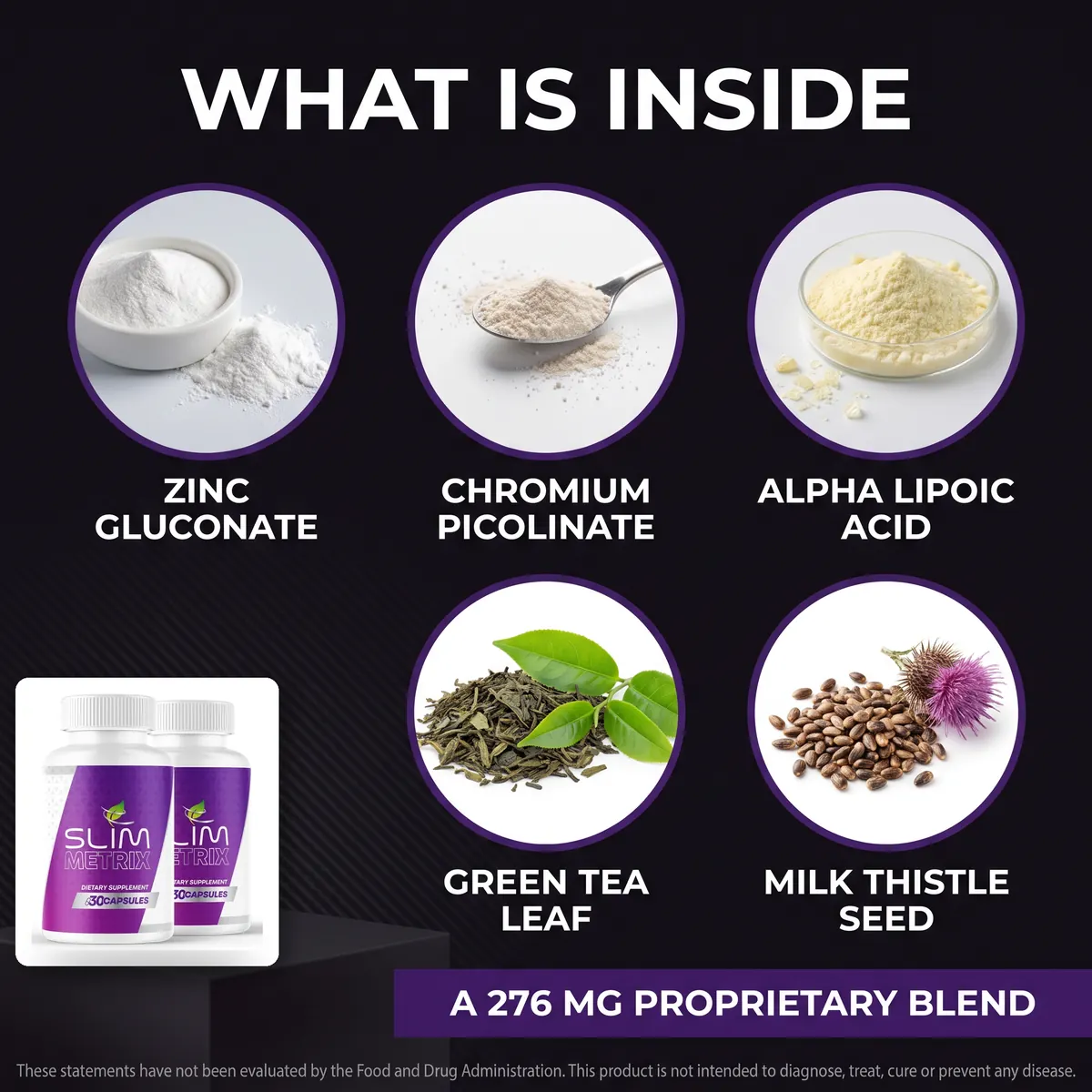
- Slim Metrix prints two amounts: chromium at 50 mcg and zinc at 5.5 mg. Eight botanicals share one printed total of 276 mg.
- Divide 276 by eight and you get about 34 mg. That is the largest an even share could be, and the split is not published so an even split is an assumption.
- Berberine's own trials used 1,000 to 1,500 mg a day. The whole blend is a fifth of the smaller figure.
- None of that makes the product dishonest. It makes a comparison with a trial impossible, which is a different problem and the one worth naming.
- A blend total is still more information than a bare ingredient list, and this article ends by saying what it is good for.
Blood sugar and body weight are medical subjects, and nothing in this article is treatment advice. Slim Metrix is a dietary supplement rather than a drug, it is not intended to diagnose, treat, cure or prevent any disease, and anybody taking medication should raise a new supplement with whoever prescribes it. The arithmetic below is about labels, not about anybody's numbers.
Why the question has no direct answer
A proprietary blend is a label convention. Instead of printing an amount against every botanical, the manufacturer prints one figure covering all of them and lists the ingredients in descending order of weight.
The commercial reason is straightforward and worth stating without sarcasm. A full row-by-row breakdown is a recipe, and a recipe can be handed to a contract manufacturer by anybody who reads it. The blend total is how a formula stays a formula rather than a public specification.
The consequence for a reader is equally straightforward. Descending order tells you that the first ingredient weighs at least as much as the second, and nothing more. There is no rule requiring the first to be a majority, or the last to be a meaningful amount of anything.
On this particular label the situation is better than the category average in one respect and identical to it in another. Chromium and zinc carry printed figures, which most blend-only labels do not offer. The eight botanicals share 276 mg, which is exactly the same problem every blend presents.
The ceiling, and how to calculate it
Here is the whole method, and it takes about ten seconds on any label in this category.
- Find the blend total. On this product it is 276 mg.
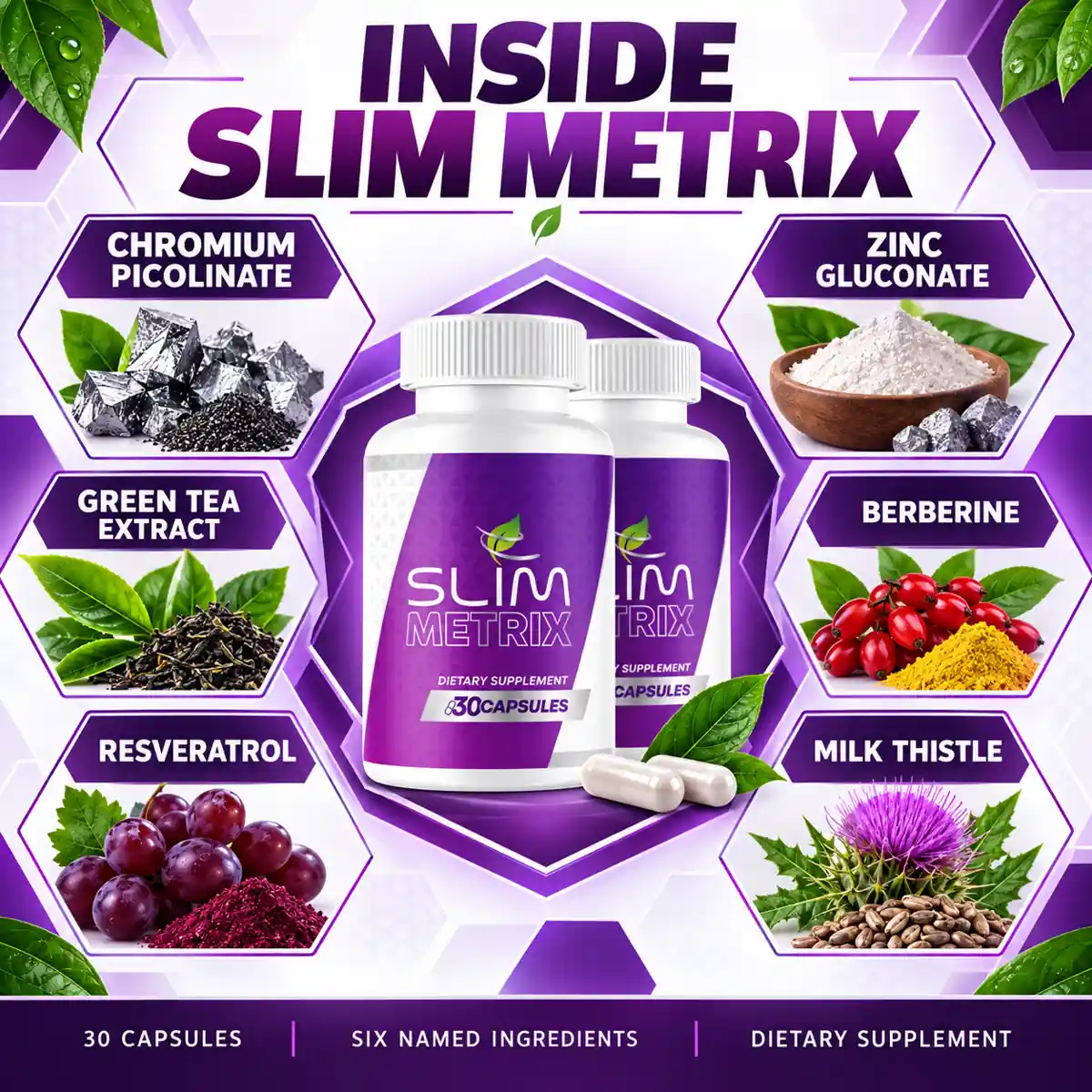
- Count the ingredients sharing it. Here that is eight: green tea extract, berberine, resveratrol, milk thistle, cayenne, Korean ginseng, banaba and alpha lipoic acid.
- Divide. 276 divided by 8 is 34.5 mg.
- Treat that figure as a ceiling on an even split rather than as a dose. The real split is almost certainly uneven, which means some rows are above it and others are below it.
- Compare the ceiling with the dose the published trials used for the ingredient you care about.
| Botanical in the blend | What its own trials used daily | Largest possible even share of 276 mg |
|---|---|---|
| Berberine | 1,000 to 1,500 mg | About 34 mg |
| Korean ginseng | 6,000 mg, split across three meals | About 34 mg |
| Milk thistle (silymarin) | Gram scale, four weeks minimum | About 34 mg |
| Green tea extract | 90 mg EGCG, three times a day | About 34 mg |
| Resveratrol | Under 500 mg, three months or longer | About 34 mg |
| Cayenne | 1 g of pepper, at a meal | About 34 mg |
| Alpha lipoic acid | No dose relationship demonstrated | About 34 mg |
| Banaba | No pooled human dose exists | About 34 mg |
The right-hand column is the arithmetic ceiling, not a claim about the recipe. An even split is an assumption and the real split is not published.
Read down the middle column and the pattern is the same for every row. These are gram-scale literatures and this is a milligram-scale blend. That is not a scandal; it is what a ten-ingredient once-daily capsule looks like from the inside, and it is true of most products in this category.
What the berberine trials actually used
Berberine is worth singling out because it has the largest randomised human literature of anything in this formula, and because the gap between that literature and any blend is the widest.
Yin's 2008 trial gave 500 mg three times a day, so 1,500 mg daily, over three months. Zhang's 2008 trial used 1,000 mg a day against placebo across the same period. Lan's 2015 meta-analysis pooled the field and found the pooled trials cluster around 0.9 to 1.5 g a day in divided doses. Ju's 2018 lipid meta-analysis covered the lipid side and reported gram-scale daily dosing across the included trials.
There is also a pharmacological reason those doses are so large, and it is the most interesting fact about this ingredient. Berberine is poorly absorbed. The trials did not use grams because grams were needed in the bloodstream; they used grams because that is what it takes to get a useful amount past the gut wall.
A berberine trial dose is not a target a blend is aiming at and falling short of. It is the amount the researchers needed in order to measure anything at all, and any formula printing a blend total in the low hundreds of milligrams is doing something other than replicating those trials.
See what Slim Metrix actually prints
Two amounts, one blend total, ten named actives and sixty days to change your mind. The ingredients page prints every row beside the amount its research ran at.
Two bottles $158 · six bottles $294 · 60-day money-back guarantee
Order Slim Metrix On The Official WebsiteOne capsule a day · 30 per bottle · lot SLI-26/SL-5338
The fair reading, and the unfair one
There are two ways to read a blend total and only one of them is honest.
The unfair reading
The unfair reading divides the total by the ingredient count, calls the result a dose, and then declares the product useless because 34 mg is not 1,000 mg. It is unfair because it invents a split nobody published and then argues with the invention.
The fair reading
The fair reading says three things at once and stops there.
- The ceiling is real. Whatever the split, no ingredient inside 276 mg can exceed 276 mg, and every one of them is far below its own trial dose.
- The selection is real too. Green tea extract standardised to 50 per cent EGCG and berberine standardised to 97 per cent are graded extracts, not powders, and a manufacturer buying those is not cutting the cheapest corner available.
- The comparison with a trial is unavailable. Not unfavourable, unavailable. That is the sentence most pages in this category will not write.
a 2011 energy-expenditure meta-analysis is the one place where a small amount is still defensible, because it found energy expenditure rose in proportion to the milligrams given, 0.4 to 0.5 kJ per mg. A response that scales with milligrams has no threshold to fail to cross, so a smaller amount produces a smaller effect rather than no effect. Vuksan's Korean red ginseng trial sits at the other end: 2 g at each meal, so 6 g a day, taken before eating, which is a quantity no capsule contains.
Four label shapes, and what each lets you work out
| What a label prints | What you can calculate | What stays unknown |
|---|---|---|
| Every row with its own milligram figure | Every comparison in the table above | Nothing |
| Some rows printed, plus a blend total for the rest | The printed rows exactly, and a hard ceiling on each unprinted one | How the total divides |
| A blend total only | A ceiling on everything inside it | Every individual amount |
| A list of names with no figures anywhere | Which ingredients are present | Anything quantitative at all |
Slim Metrix is the second row: chromium and zinc are printed, and eight botanicals share 276 mg.
The most useful thing on that table is the gap between the second row and the fourth. A product printing some figures and a blend total for the rest has given you a hard ceiling on everything. A product printing a list of names and nothing else has given you no quantitative information at all, and the second is far more common than the first.
What to do with the answer
The ceiling is a decision tool rather than a verdict, and it points different readers in different directions.
- If you want to test berberine specifically, buy berberine specifically. A single-ingredient capsule can reach the trial dose, it will cost less, and you will know exactly what you are taking.
- If you want a daily habit across several routes at modest amounts, a blend is what that looks like, and the ingredient list here is a well-chosen one.
- If you are comparing two blends, compare the totals divided by the counts rather than the ingredient lists. A longer list in the same total is a weaker formula, not a stronger one.
- If a page quotes a per-ingredient milligram for a blended product, check whether the manufacturer published it. On this product nobody has.
- If you buy it, use the window. 60 days is long enough to find out whether the blend does anything for you, which is the only test available when the amounts cannot be compared in advance.
That last point is the practical conclusion of the whole article. When the arithmetic cannot settle a question in advance, a refund window that is longer than the wait is worth more than any figure on the label. The guarantee page sets out how to use it as a trial rather than as a backstop, and the results timeline says what to record while you do.
References
- Yin J, Xing H, Ye J. Efficacy of berberine in patients with type 2 diabetes mellitus. Metabolism. 2008;57(5):712-7. PMID 18442638. https://pubmed.ncbi.nlm.nih.gov/18442638/
- Zhang Y, Li X, Zou D, et al. Treatment of type 2 diabetes and dyslipidemia with the natural plant alkaloid berberine. J Clin Endocrinol Metab. 2008;93(7):2559-65. PMID 18397984. https://pubmed.ncbi.nlm.nih.gov/18397984/
- Lan J, Zhao Y, Dong F, et al. Meta-analysis of the effect and safety of berberine in the treatment of type 2 diabetes mellitus, hyperlipemia and hypertension. J Ethnopharmacol. 2015;161:69-81. PMID 25498346. https://pubmed.ncbi.nlm.nih.gov/25498346/
- Ju J, Li J, Lin Q, et al. Efficacy and safety of berberine for dyslipidaemias: A systematic review and meta-analysis of randomized clinical trials. Phytomedicine. 2018;50:25-34. PMID 30466986. https://pubmed.ncbi.nlm.nih.gov/30466986/
- Hursel R, Viechtbauer W, Dulloo AG, et al. The effects of catechin rich teas and caffeine on energy expenditure and fat oxidation: a meta-analysis. Obes Rev. 2011;12(7):e573-81. PMID 21366839. https://pubmed.ncbi.nlm.nih.gov/21366839/
- Vuksan V, Sung MK, Sievenpiper JL, et al. Korean red ginseng (Panax ginseng) improves glucose and insulin regulation in well-controlled, type 2 diabetes: results of a randomized, double-blind, placebo-controlled study of efficacy and safety. Nutr Metab Cardiovasc Dis. 2008;18(1):46-56. PMID 16860976. https://pubmed.ncbi.nlm.nih.gov/16860976/
Read the arithmetic first, then decide about Slim Metrix
Ten named actives, two printed amounts, one blend total, 30 capsules a bottle, and 60 days from the date of purchase to change your mind.
Two bottles $158 · six bottles $294 · 60-day money-back guarantee
Order Slim Metrix On The Official WebsiteOne capsule a day · 30 per bottle · lot SLI-26/SL-5338