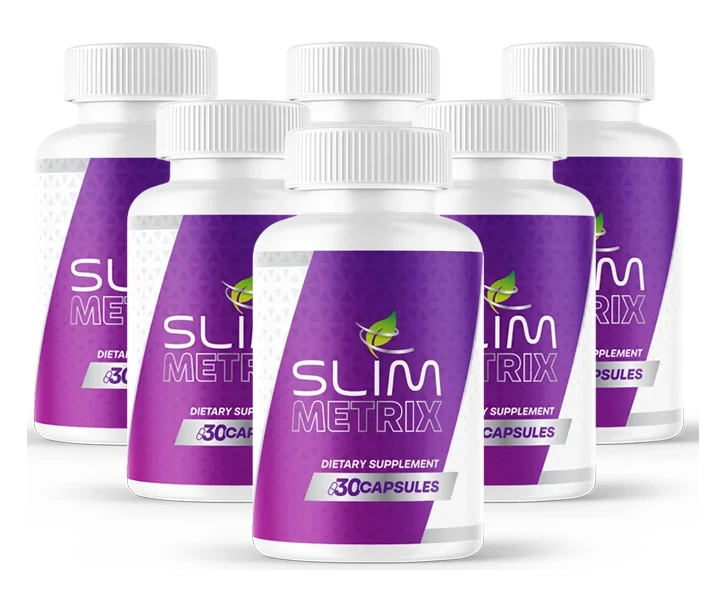
Slim Metrix Official Website › Ingredients
IngredientsSlim Metrix Ingredients: Ten Named Actives and Two Printed Amounts
Slim Metrix names ten actives. Chromium picolinate is printed at 50 mcg and zinc gluconate at 5.5 mg; the other eight are botanicals sharing one printed total of 276 mg. No Supplement Facts panel appears in the artwork held here, so this page prints each row with its source and sets the trial doses beside it.
Three documents describe this formula and no two agree. All three are printed below, and the widest of them is the one the rest of this website works from.
Where each Slim Metrix figure on this page comes from
Four documents, side by side, before a single ingredient is discussed.
| Document | What it names | What it prints |
|---|---|---|
| The paperwork held by this desk | Six ingredients | Chromium picolinate, zinc gluconate, green tea extract, berberine, resveratrol, milk thistle. No amounts. |
| The INSIDE SLIM METRIX artwork | The same six | SIX NAMED INGREDIENTS across the foot, 30 CAPSULES on the bottle front. No amounts. |
| The WHAT IS INSIDE artwork | Five | Zinc, chromium, alpha lipoic acid, green tea leaf, milk thistle seed, and A 276 MG PROPRIETARY BLEND. |
| The seller's product description | Ten | The six, plus cayenne, Korean ginseng, banaba and alpha lipoic acid. Chromium 50 mcg at 41.67 per cent DV, zinc 5.5 mg at 50 per cent DV, 276 mg of botanicals. |
Read against each other on 19 September 2026. Where the documents disagree this website takes the widest reading and prints the disagreement.
Two things follow from that table and both matter more than they look.
The first is that alpha lipoic acid is real. It appears on one piece of the vendor's own artwork and in the seller's own description, and it is absent from the other artwork and from the paperwork. A website that named only six would be quoting the narrower half of the vendor's own material.
The second is that the 276 mg figure exists at all. One graphic prints it, and it is the single most useful number on this product, because it is the only one that lets a reader do any arithmetic about the botanical half of the formula.
The full Slim Metrix ingredient list, row by row
Ten rows, each with its standardisation, its evidence and the amount the trials used.
Chromium Picolinate
50 mcg, 41.67% DVAn essential trace mineral. The body uses it in the pathway by which insulin moves glucose into cells, and the seller's framing is blood-sugar balance, carb metabolism and fewer sweet cravings.
the Cochrane review of chromium picolinate is the reference point: 200, 400, 500 and 1,000 mcg a day were the arms pooled; no dose gradient emerged. Onakpoya's 2013 meta-analysis pooled the overweight and obesity trials separately; a 2019 meta-analysis in Clinical Obesity found improvements concentrated in trials of 12 weeks or less at doses up to 400 mcg a day; and a 2024 dose-response meta-analysis pooled fourteen randomised trials; no significant change in weight, BMI, fat mass or waist.
Read the two columns together and the row describes itself: an essential mineral at a dietary top-up, in the salt every one of those reviews used.
Zinc Gluconate
5.5 mg, 50% DVHalf a day's reference intake of a mineral involved in hundreds of enzyme reactions, including several on the metabolic side, plus immune function and hormone signalling.
Capdor's zinc meta-analysis covered fourteen reports and 3,978 people; fasting glucose fell 0.19 mmol/L overall, with a larger reduction in people who already had a metabolic condition than in healthy participants. a 2024 GRADE-assessed review pooled twenty-three trials; the authors rate the certainty of most outcomes low or very low.
This is the row where a modest amount is the right amount. Maret and Sandstead on zinc requirements explains why more is not automatically better with this mineral.
Green Tea Extract
Camellia sinensis50% EGCG, 80% catechinsThe best-standardised row on the bottle and the one with the most direct thermogenic evidence. Catechins, and EGCG in particular, are the compounds the word thermogenic usually refers to in this category.
Dulloo's 24-hour chamber study used 90 mg EGCG plus 50 mg caffeine, three times a day, with meals and measured a rise in 24-hour energy expenditure and fat oxidation. a 2011 energy-expenditure meta-analysis pooled that work: energy expenditure rose in proportion to the milligrams given, 0.4 to 0.5 kJ per mg. Hursel's 2009 meta-analysis covered the weight question directly, eleven studies; catechins moved body weight by 1.31 kg, and habitual caffeine intake above 300 mg a day blunted it.
It also carries the one published safety caution on this bottle, which is set out in full on the side effects page.
Berberine
Berberis aristata97%An isoquinoline alkaloid from barberry root, standardised here to 97 per cent. The sales page calls it nature's metabolic molecule, and it has the largest randomised human literature of anything in this capsule.
Yin's 2008 trial used 0.5 g three times a day, so 1,500 mg daily, over three months. Zhang's 2008 trial used 1.0 g a day against placebo for three months. Lan's 2015 meta-analysis found the pooled trials cluster around 0.9 to 1.5 g a day in divided doses, and Ju's 2018 lipid meta-analysis reported the same scale on the lipid side.
Those figures are grams a day. The whole botanical blend here is 276 mg, which is the arithmetic the section below sets out.
Resveratrol
In the 276 mg blendA stilbene polyphenol, most familiar from grape skin. Studied for metabolic markers, inflammation and body composition rather than for weight on its own.
Mousavi's dose-response meta-analysis pooled 28 trials; weight fell 0.51 kg, and the effect sat in trials under 500 mg a day running three months or longer. a 2021 umbrella review sits a level above those trials and reviews the meta-analyses rather than the trials, and grades the certainty low.
Milk Thistle
Silybum marianum80% silymarinSilymarin is the flavonolignan complex from the seed, and the standardisation here is the usual one. Best known for liver support, included in metabolic formulas for its glucose work.
Voroneanu's 2016 meta-analysis found five trials, 270 patients; fasting glucose fell 26.86 mg/dL, on evidence the authors themselves call low quality. a 2025 insulin-sensitivity meta-analysis covered six studies, 673 participants, at least four weeks of supplementation each and reported a limited effect on insulin resistance.
Hermann and von Richter's interaction review also names milk thistle as a CYP2C9 inhibitor, which is the second reason the medication question on this bottle is worth asking once.
Cayenne
Capsicum annuum40,000 heat unitsPrinted at 40,000 HU on the seller's page, which is a heat rating rather than a dose. Capsaicin is the active compound and the literature behind it is about meals.
Ludy and Mattes on red pepper served 1 g of red pepper served AT a meal; the effect was larger eaten than swallowed in a capsule. Janssens on capsaicin and fullness gave 2.56 mg of capsaicin, about 1.03 g of red chilli, with every meal and measured fullness and desire to eat.
This website makes no thermogenic claim for the cayenne row and the reason is in the refusals below.
Korean Ginseng
Panax ginseng8% ginsenosidesStandardised to 8 per cent ginsenosides, which is a respectable figure for a root extract. The human evidence splits cleanly in two and both halves are printed.
Vuksan's Korean red ginseng trial used 2 g at each meal, so 6 g a day, taken before eating and found better glucose and insulin regulation in well-controlled type 2 diabetes. Reeds' negative ginseng trial used 8 g a day of root extract, or 250 to 500 mg a day of ginsenoside Re, for 30 days and found nothing.
Banaba
Lagerstroemia speciosa2% corosolic acidA leaf extract standardised to corosolic acid, used in folk medicine for blood sugar and studied on and off since 1940.
Stohs' banaba review is a narrative review across animal, human and in-vitro work rather than a pooled human dose. There is no pooled human dose to set beside a blend share, and this website records that rather than inventing one.
Alpha Lipoic Acid
In the 276 mg blendA disulphide compound the body makes and uses in mitochondrial energy metabolism. It is the row that appears on one graphic and not the other, which is why the provenance table above comes first on this page.
Kucukgoncu's weight meta-analysis pooled ten double-blind trials; 1.27 kg more weight lost than placebo, with no dose relationship detectable. a 2021 dose-response meta-analysis models the response against both the daily amount and the length of the trial.
What 276 milligrams means across the Slim Metrix botanicals
One blend, eight botanicals, and the trial doses each of them borrows its reputation from.
This is the section the rest of this page exists to support, and it is the only place on this website where the arithmetic is worked all the way through.
- A share of 276 mg across eight botanicals averages about 34 mg each, and an even split is an assumption rather than a fact.
- Berberine's smallest positive trial dose is 1,000 mg a day. The whole blend is roughly a fifth of it.
- Korean ginseng's positive trial used 6 g a day in three 2 g portions before meals. Its negative trial used 8 g.
- Green tea is the row where a small amount is most defensible: the extract is standardised to 50 per cent EGCG, and the pooled energy-expenditure data tracked milligrams rather than needing a threshold to cross.
- Resveratrol's effect sat below 500 mg a day, so it is the second row where a modest amount is not automatically pointless.
- Alpha lipoic acid showed no detectable dose relationship at all, which cuts in both directions and is printed for that reason.
A printed blend total protects a formula from being copied line for line, and most of this category is sold that way. It is a commercial decision rather than a dishonest one. What it cannot do is let a reader compare this capsule with a published trial, and anyone who tells you otherwise has filled in a number the seller did not print.
Four claims this desk will not make for Slim Metrix
Each one is a claim the category makes routinely, with the reason it is absent here.
that the capsule burns fat
No trial in this list tested this formula, and the largest single human effect anywhere in it is a 1.31 kg pooled difference for catechins over eleven studies. The label's own wording is support for fat-metabolism pathways, and that is the ceiling this website writes to.
a thermogenic effect from the cayenne in this capsule
Ludy and Mattes measured red pepper eaten at a meal, 1 g of it, and reported the capsule form as the weaker of the two. Janssens used 2.56 mg of capsaicin with every meal. One capsule in the morning is neither design.
a blood-sugar effect from the banaba in this capsule
The human literature on banaba at this scale is a narrative review, not a pooled trial set, and the blend prints no corosolic-acid amount to compare against it.
that ginseng improves insulin sensitivity
Vuksan found a benefit at 6 g a day. Reeds gave 8 g a day for 30 days and found no change in beta-cell function or insulin sensitivity. A split literature is not a claim, and neither trial is a fraction of 276 mg.
A fifth refusal covers per-ingredient amounts inside the blend, and it is the reason the table above prints a share rather than a figure. The seller publishes one figure for eight botanicals, 276 mg in total. Dividing it would be arithmetic presented as disclosure.
Slim Metrix ingredient questions
How many ingredients are in Slim Metrix?
Ten, on the widest reading. Six appear in the paperwork and on the INSIDE SLIM METRIX graphic, five on the WHAT IS INSIDE graphic, and ten in the seller's own product description. This website counts ten and prints all three lists.
Is there alpha lipoic acid in it or not?
The seller names it and one of the vendor's two ingredient graphics shows it. The other graphic and the paperwork do not. This website counts it in and flags the disagreement rather than choosing silently.
Why is there no milligram figure for berberine?
Because the seller publishes one total for eight botanicals rather than a figure for each. That total is 276 mg. Any per-ingredient number you see quoted for this product has been estimated by somebody.
Which ingredient has the strongest evidence?
Berberine has the largest randomised human literature, and green tea extract has the most direct evidence for the mechanism the product is named after. Both of those literatures ran at doses this blend cannot reach.
Does it contain caffeine?
No caffeine is named in any of the four documents. Green tea extract standardised for catechins is not the same as a caffeine source, though the two often travel together in this category.
Are there any allergens?
The bottle ships gluten-free and dairy-free roundels. No other allergen statement appears, and the capsule-shell material is not published anywhere.
Who publishes this Slim Metrix website?
- Tian H, Guo X, Wang X, et al. Chromium picolinate supplementation for overweight or obese adults. Cochrane Database Syst Rev. 2013;2013(11):CD010063. PMID 24293292. https://pubmed.ncbi.nlm.nih.gov/24293292/
- Onakpoya I, Posadzki P, Ernst E. Chromium supplementation in overweight and obesity: a systematic review and meta-analysis of randomized clinical trials. Obes Rev. 2013;14(6):496-507. PMID 23495911. https://pubmed.ncbi.nlm.nih.gov/23495911/
- Tsang C, Taghizadeh M, Aghabagheri E, et al. A meta-analysis of the effect of chromium supplementation on anthropometric indices of subjects with overweight or obesity. Clin Obes. 2019;9(4):e12313. PMID 31115179. https://pubmed.ncbi.nlm.nih.gov/31115179/
- Vajdi M, Khajeh M, Safaei E, et al. Effects of chromium supplementation on body composition in patients with type 2 diabetes: A dose-response systematic review and meta-analysis of randomized controlled trials. J Trace Elem Med Biol. 2024;81:127338. PMID 37952433. https://pubmed.ncbi.nlm.nih.gov/37952433/
- Capdor J, Foster M, Petocz P, et al. Zinc and glycemic control: a meta-analysis of randomised placebo controlled supplementation trials in humans. J Trace Elem Med Biol. 2013;27(2):137-42. PMID 23137858. https://pubmed.ncbi.nlm.nih.gov/23137858/
- Nazari M, Nikbaf-Shandiz M, Pashayee-Khamene F, et al. Zinc Supplementation in Individuals with Prediabetes and type 2 Diabetes: a GRADE-Assessed Systematic Review and Dose-Response Meta-analysis. Biol Trace Elem Res. 2024;202(7):2966-2990. PMID 37870684. https://pubmed.ncbi.nlm.nih.gov/37870684/
- Maret W, Sandstead HH. Zinc requirements and the risks and benefits of zinc supplementation. J Trace Elem Med Biol. 2006;20(1):3-18. PMID 16632171. https://pubmed.ncbi.nlm.nih.gov/16632171/
- Dulloo AG, Duret C, Rohrer D, et al. Efficacy of a green tea extract rich in catechin polyphenols and caffeine in increasing 24-h energy expenditure and fat oxidation in humans. Am J Clin Nutr. 1999;70(6):1040-5. PMID 10584049. https://pubmed.ncbi.nlm.nih.gov/10584049/
- Hursel R, Viechtbauer W, Westerterp-Plantenga MS. The effects of green tea on weight loss and weight maintenance: a meta-analysis. Int J Obes (Lond). 2009;33(9):956-61. PMID 19597519. https://pubmed.ncbi.nlm.nih.gov/19597519/
- Hursel R, Viechtbauer W, Dulloo AG, et al. The effects of catechin rich teas and caffeine on energy expenditure and fat oxidation: a meta-analysis. Obes Rev. 2011;12(7):e573-81. PMID 21366839. https://pubmed.ncbi.nlm.nih.gov/21366839/
- Yin J, Xing H, Ye J. Efficacy of berberine in patients with type 2 diabetes mellitus. Metabolism. 2008;57(5):712-7. PMID 18442638. https://pubmed.ncbi.nlm.nih.gov/18442638/
- Zhang Y, Li X, Zou D, et al. Treatment of type 2 diabetes and dyslipidemia with the natural plant alkaloid berberine. J Clin Endocrinol Metab. 2008;93(7):2559-65. PMID 18397984. https://pubmed.ncbi.nlm.nih.gov/18397984/
- Lan J, Zhao Y, Dong F, et al. Meta-analysis of the effect and safety of berberine in the treatment of type 2 diabetes mellitus, hyperlipemia and hypertension. J Ethnopharmacol. 2015;161:69-81. PMID 25498346. https://pubmed.ncbi.nlm.nih.gov/25498346/
- Ju J, Li J, Lin Q, et al. Efficacy and safety of berberine for dyslipidaemias: A systematic review and meta-analysis of randomized clinical trials. Phytomedicine. 2018;50:25-34. PMID 30466986. https://pubmed.ncbi.nlm.nih.gov/30466986/
- Hermann R, von Richter O. Clinical evidence of herbal drugs as perpetrators of pharmacokinetic drug interactions. Planta Med. 2012;78(13):1458-77. PMID 22855269. https://pubmed.ncbi.nlm.nih.gov/22855269/
- Mousavi SM, Milajerdi A, Sheikhi A, et al. Resveratrol supplementation significantly influences obesity measures: a systematic review and dose-response meta-analysis of randomized controlled trials. Obes Rev. 2019;20(3):487-498. PMID 30515938. https://pubmed.ncbi.nlm.nih.gov/30515938/
- Zeraattalab-Motlagh S, Jayedi A, Shab-Bidar S. The effects of resveratrol supplementation in patients with type 2 diabetes, metabolic syndrome, and nonalcoholic fatty liver disease: an umbrella review of meta-analyses of randomized controlled trials. Am J Clin Nutr. 2021;114(5):1675-1685. PMID 34320173. https://pubmed.ncbi.nlm.nih.gov/34320173/
- Voroneanu L, Nistor I, Dumea R, et al. Silymarin in Type 2 Diabetes Mellitus: A Systematic Review and Meta-Analysis of Randomized Controlled Trials. J Diabetes Res. 2016;2016:5147468. PMID 27340676. https://pubmed.ncbi.nlm.nih.gov/27340676/
- Yin S, Zhu F, Liu Y, et al. Effects of silymarin on insulin resistance and sensitivity: A systematic review and meta-analysis of randomized controlled trials. Diabetes Res Clin Pract. 2025;220:112008. PMID 39855603. https://pubmed.ncbi.nlm.nih.gov/39855603/
- Ludy MJ, Mattes RD. The effects of hedonically acceptable red pepper doses on thermogenesis and appetite. Physiol Behav. 2011;102(3-4):251-8. PMID 21093467. https://pubmed.ncbi.nlm.nih.gov/21093467/
- Janssens PL, Hursel R, Westerterp-Plantenga MS. Capsaicin increases sensation of fullness in energy balance, and decreases desire to eat after dinner in negative energy balance. Appetite. 2014;77:44-9. PMID 24630935. https://pubmed.ncbi.nlm.nih.gov/24630935/
- Vuksan V, Sung MK, Sievenpiper JL, et al. Korean red ginseng (Panax ginseng) improves glucose and insulin regulation in well-controlled, type 2 diabetes: results of a randomized, double-blind, placebo-controlled study of efficacy and safety. Nutr Metab Cardiovasc Dis. 2008;18(1):46-56. PMID 16860976. https://pubmed.ncbi.nlm.nih.gov/16860976/
- Reeds DN, Patterson BW, Okunade A, et al. Ginseng and ginsenoside Re do not improve beta-cell function or insulin sensitivity in overweight and obese subjects with impaired glucose tolerance or diabetes. Diabetes Care. 2011;34(5):1071-6. PMID 21411505. https://pubmed.ncbi.nlm.nih.gov/21411505/
- Stohs SJ, Miller H, Kaats GR. A review of the efficacy and safety of banaba (Lagerstroemia speciosa L.) and corosolic acid. Phytother Res. 2012;26(3):317-24. PMID 22095937. https://pubmed.ncbi.nlm.nih.gov/22095937/
- Kucukgoncu S, Zhou E, Lucas KB, et al. Alpha-lipoic acid (ALA) as a supplementation for weight loss: results from a meta-analysis of randomized controlled trials. Obes Rev. 2017;18(5):594-601. PMID 28295905. https://pubmed.ncbi.nlm.nih.gov/28295905/
- Mahmoudi-Nezhad M, Vajdi M, Farhangi MA. An updated systematic review and dose-response meta-analysis of the effects of alpha-lipoic acid supplementation on glycemic markers in adults. Nutrition. 2021;82:111041. PMID 33199187. https://pubmed.ncbi.nlm.nih.gov/33199187/
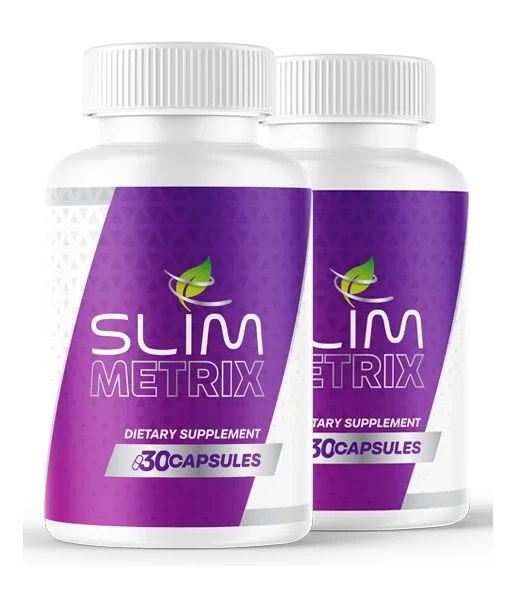
Buy Slim Metrix once the ten rows make sense
Two published figures, one shared total, and a window long enough to find out what the arithmetic cannot tell you in advance.
Two bottles $158 · six bottles $294 · 60-day money-back guarantee
Order Slim Metrix On The Official WebsiteOne capsule a day · 30 per bottle · lot SLI-26/SL-5338