Slim Metrix Official Website › Blog › One Capsule Or Three
Slim Metrix Dosage: One Capsule A Day Or Three?
The Slim Metrix dosage is one capsule a day, taken in the morning with or without food, and a 30-capsule bottle lasts a month. One is the dose, and taking more is not better. Food is the safer habit because of the published caution on concentrated green tea extract. This article weighs that once-daily format, which people keep taking, against the three-a-day schedules most of the ingredient trials used.
- Most of the trials behind these ingredients split the daily amount across two or three doses, usually with meals.
- A once-daily capsule cannot do that, and it cannot carry two or three capsules' worth of material either.
- What it can do is get taken every morning for eight weeks, which is the variable that decides whether anything else matters.
- The ingredient that loses least from once-daily dosing is chromium. The ones that lose most are cayenne and Korean ginseng, both of which are meal-timed literatures.
- If you want to replicate a trial, buy a single ingredient and take it as the trial did. That is a better purchase and this article says so.
Blood sugar and body weight are medical subjects, and nothing in this article is treatment advice. Slim Metrix is a dietary supplement rather than a drug, it is not intended to diagnose, treat, cure or prevent any disease, and anybody taking medication should raise a new supplement with whoever prescribes it. The arithmetic below is about labels, not about anybody's numbers.
The trade, stated plainly
| One capsule a day | Two or three a day | |
|---|---|---|
| What it matches | How people actually behave | How most trials actually dosed |
| Chances to forget | One | Two or three |
| Total daily amount possible | One capsule's worth | Two or three times as much |
| Spacing of the dose | One exposure | Split, which several of these literatures required |
| Meal timing | One meal | Can be taken with each meal, which cayenne's literature is built on |
| What usually goes wrong | Nothing, if the anchor is good | The second and third doses stop happening in week three |
Both columns are legitimate designs. They are optimising different things and the right answer depends on the reader.
There is no trick in that table. A once-daily capsule optimises for the thing people are worst at, which is remembering, and gives up the thing trials are built on, which is the split dose.
What makes the trade worth taking seriously rather than dismissing is that the thing being optimised for is not trivial. A three-times-daily formula that gets taken once a day from week three is delivering a third of its intended amount at the wrong times, which is worse than a once-daily formula taken as directed.
How the trials actually dosed
It is worth being specific rather than general about this, because the split matters more for some ingredients than others.
Dulloo's 24-hour chamber study gave 90 mg EGCG plus 50 mg caffeine, three times a day, with meals. Yin's 2008 trial used 0.5 g three times a day, so 1,500 mg daily, over three months. Vuksan's Korean red ginseng trial used 2 g at each meal, so 6 g a day, taken before eating. Ludy and Mattes on red pepper served 1 g of red pepper served AT a meal; the effect was larger eaten than swallowed in a capsule and found the capsule form weaker than the eaten form, which is the strongest statement in this whole reference list about why format matters.
a 2019 meta-analysis in Clinical Obesity is the exception that proves the point: chromium trials generally used a single daily amount, and that review found improvements concentrated in trials of 12 weeks or less at doses up to 400 mcg a day. A once-daily capsule gives up nothing at all on that row.
Why adherence is not a consolation prize
There is a tendency to treat adherence as the thing you say about a product when you cannot say anything about its dose. That is unfair to the argument.
- A supplement that is not taken has an effect of exactly zero, whatever its label says.
- The literature behind these ingredients runs at four weeks to three months. A routine has to survive that long before any of it is relevant.
- Six of the eight buyers in this desk's own file reordered before the last bottle ran out, and the thing they describe is that the habit stuck.
- The commonest complaint about three-times-daily formulas in this category is not that they did not work. It is that the second and third doses stopped happening.
- A format that gets taken is a precondition for everything else, not a substitute for it.
So the honest framing is not that adherence makes up for a smaller dose. It is that adherence is a separate variable that has to be satisfied before dose becomes relevant at all, and a once-daily format satisfies it more reliably.
One capsule, one time of day
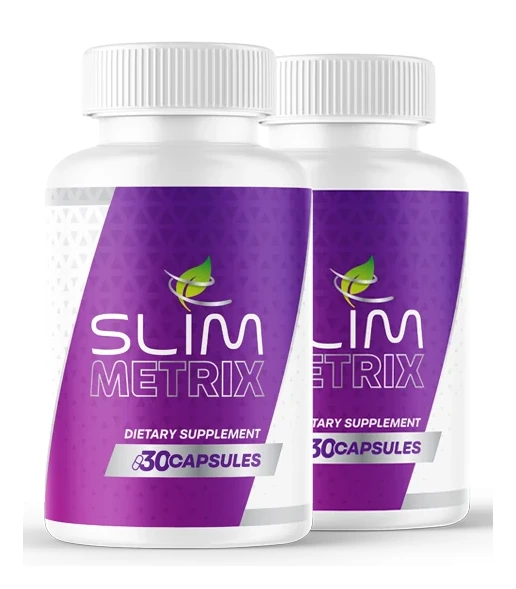
Thirty capsules a bottle, taken in the morning with food, and sixty days to find out whether the format suits you.
Two bottles $158 · six bottles $294 · 60-day money-back guarantee
Order Slim Metrix On The Official WebsiteOne capsule a day · 30 per bottle · lot SLI-26/SL-5338
What this format costs, ingredient by ingredient
| Ingredient | How its trials dosed it | What a once-daily capsule gives up |
|---|---|---|
| Green tea extract | 90 mg EGCG three times a day, with meals | The splitting, and two of the three exposures |
| Berberine | 500 mg three times a day in the largest trial | The splitting, and most of the amount |
| Korean ginseng | 2 g before each of three meals | The meal timing, which is the whole design |
| Cayenne | 1 g of pepper at a meal | The meal association entirely. This literature is about eating |
| Chromium | A single daily amount in most trials | Nothing. This row loses least from once-daily dosing |
Read the right-hand column and the pattern is clear: a once-daily format costs the split-dose ingredients most and the single-dose ingredients least.
Two rows in that table deserve a closer look because they are the most expensive.
Cayenne loses the most
The capsaicinoid literature is about meals. Ludy and Mattes on red pepper served 1 g of red pepper served AT a meal; the effect was larger eaten than swallowed in a capsule, and the detail that matters is that the pepper eaten at a meal produced a larger effect than the same amount swallowed in a capsule. A morning capsule is neither the amount nor the delivery nor the timing, and this website makes no thermogenic claim for that row as a result.
Korean ginseng loses the design
Vuksan's Korean red ginseng trial used 2 g at each meal, so 6 g a day, taken before eating, taken before eating. The preprandial timing was part of the intervention rather than a detail, and a once-daily capsule cannot reproduce it at any dose.
Those two are the clearest examples of an ingredient being present for the label rather than for the mechanism, and naming them is more useful than a general disclaimer about blends.
What the format is not an excuse for
Adherence is a real argument and it is also the argument most easily abused, so it is worth drawing the line clearly.
- It does not excuse an unprinted amount. A once-daily capsule could print every figure and this one does not. Those are two separate decisions and only the first is about format.
- It does not excuse a long ingredient list. Ten names inside one total is not made better by the capsule being taken reliably. If anything the opposite: a reliable delivery of a smaller share is still a smaller share.
- It does not excuse a missing caution. Green tea extract carries a published warning at any dosing frequency, and a product taken once a day has exactly the same obligation to mention it as one taken three times.
- It does not make a claim true. Nothing about a convenient schedule changes what an ingredient has been shown to do, and none of the five printed claims on this product gets easier to support because the capsule is easy to swallow.
The defensible version of the adherence argument is narrow and it is worth stating in one sentence: a once-daily format makes a modest formula more likely to be taken for long enough to matter, and that is all it does. Everything else about the product has to stand on its own.
Who should buy which
This is the section the article exists for, and it points two different readers in two different directions.
- If you want to test an ingredient. Buy that ingredient on its own and take it as its trials did. A single-ingredient berberine capsule at gram scale, split across the day, is a far better purchase than any blend for that purpose, and it will cost less.
- If you want a daily habit across several routes. A once-daily blend is what that looks like, and the ingredient selection on this one is a considered one with real standardisations behind it.
- If you have abandoned a three-times-daily formula before. The format is the reason, and changing the format is a more useful change than changing the brand.
- If you are not sure. The two-bottle rung is sixty days, the window is sixty days, and eight weeks of one capsule a morning will tell you more than any amount of further reading.
None of those four is a recommendation to buy this product, and the first is explicitly a recommendation to buy something else. The checklist turns the same question into nine points you can take to any label, and scores this desk's own product against them in public, including the three points it fails.
References
- Dulloo AG, Duret C, Rohrer D, et al. Efficacy of a green tea extract rich in catechin polyphenols and caffeine in increasing 24-h energy expenditure and fat oxidation in humans. Am J Clin Nutr. 1999;70(6):1040-5. PMID 10584049. https://pubmed.ncbi.nlm.nih.gov/10584049/
- Yin J, Xing H, Ye J. Efficacy of berberine in patients with type 2 diabetes mellitus. Metabolism. 2008;57(5):712-7. PMID 18442638. https://pubmed.ncbi.nlm.nih.gov/18442638/
- Vuksan V, Sung MK, Sievenpiper JL, et al. Korean red ginseng (Panax ginseng) improves glucose and insulin regulation in well-controlled, type 2 diabetes: results of a randomized, double-blind, placebo-controlled study of efficacy and safety. Nutr Metab Cardiovasc Dis. 2008;18(1):46-56. PMID 16860976. https://pubmed.ncbi.nlm.nih.gov/16860976/
- Ludy MJ, Mattes RD. The effects of hedonically acceptable red pepper doses on thermogenesis and appetite. Physiol Behav. 2011;102(3-4):251-8. PMID 21093467. https://pubmed.ncbi.nlm.nih.gov/21093467/
- Tsang C, Taghizadeh M, Aghabagheri E, et al. A meta-analysis of the effect of chromium supplementation on anthropometric indices of subjects with overweight or obesity. Clin Obes. 2019;9(4):e12313. PMID 31115179. https://pubmed.ncbi.nlm.nih.gov/31115179/
Order Slim Metrix if the format is the part that suits you
One capsule a morning, 30 in a bottle, and 60 days from purchase to decide.
Two bottles $158 · six bottles $294 · 60-day money-back guarantee
Order Slim Metrix On The Official WebsiteOne capsule a day · 30 per bottle · lot SLI-26/SL-5338